
Infection protection and Control: Post Covid-19 Design Strategies
Designing healthcare facilities in the post-COVID landscape brings with it new considerations for the control of the spread of infectious diseases.
Prior to the pandemic, IPAC guidelines were primarily focused on washable surfaces, seamless finishes, handwashing sinks, and environmental cleaning. While these continue to be important inclusions in every design, the COVID pandemic led to the revision of these guidelines to include special considerations for ventilation, source control, isolation, traffic flow, PPE workflow, and operational resilience.
As such, IPAC is now considered at every stage of the design process, from initial workflow mapping and schematic planning to meeting strict spatial guidelines and selection of accessories and finishes.
The following design strategies have emerged from our research when designing post-pandemic healthcare environments:
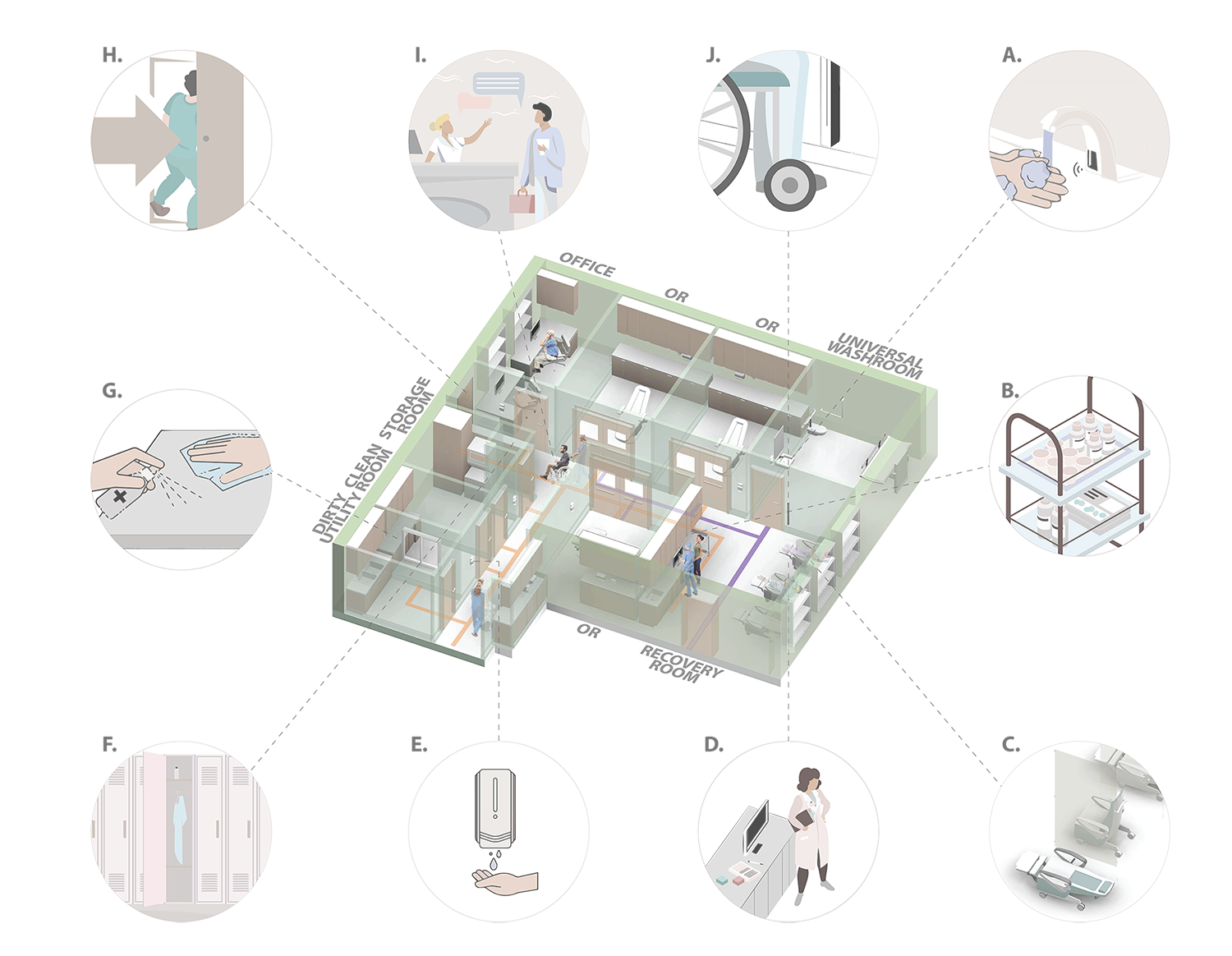
A. Integration of Touchless Technology
Incorporate automated systems to reduce contact with shared surfaces. This includes automatic faucets, touchless hand towel dispensers, and voice-activated equipment, all of which contribute to minimizing cross-contamination.
B. Protective Surface Coverings
Utilize disposable or replaceable absorptive pads on high-touch work surfaces to reduce the transmission of contaminants and facilitate efficient cleaning protocols.
C. Alternative Privacy Partitions
Replace traditional fabric privacy curtains, which can harbour bacteria, with easily cleanable privacy panels made from non-porous materials.
D. Decentralized Patient Flow
Design individualized post-operative recovery and discharge areas to reduce patient clustering, limit cross-contact, and improve overall circulation efficiency within the facility.
E. Hand Hygiene Stations
Provide hand sanitizing stations at key transition points, including building entrances and high-traffic areas throughout the facility, to encourage consistent hand hygiene practices.
F. Transitional Storage Zones
Locate personal storage spaces (such as lockers and coat or shoe closets) near facility entrances to support the removal of outerwear and footwear and reducing the introduction of external contaminants.
G. Durable, Hygienic Material Selection
Specify microbial-resistant fabrics and prioritize non-porous, non-organic materials that can withstand rigorous cleaning regimens using hospital-grade disinfectants.
H. Dedicated Circulation Paths
Establish separate access points and circulation routes for medical staff to minimize unnecessary interaction with patients and reduce potential contamination pathways.
I. Enhanced Environmental Systems
Install or upgrade mechanical systems that provide continuous air purification to improve indoor air quality and reduce the presence of airborne pathogens.
J. Accessible Door Operation Systems
Incorporate extended or foot-operated door hardware to enable hands-free operation, enhancing both infection control and universal accessibility.